

Define what the pack has to protect
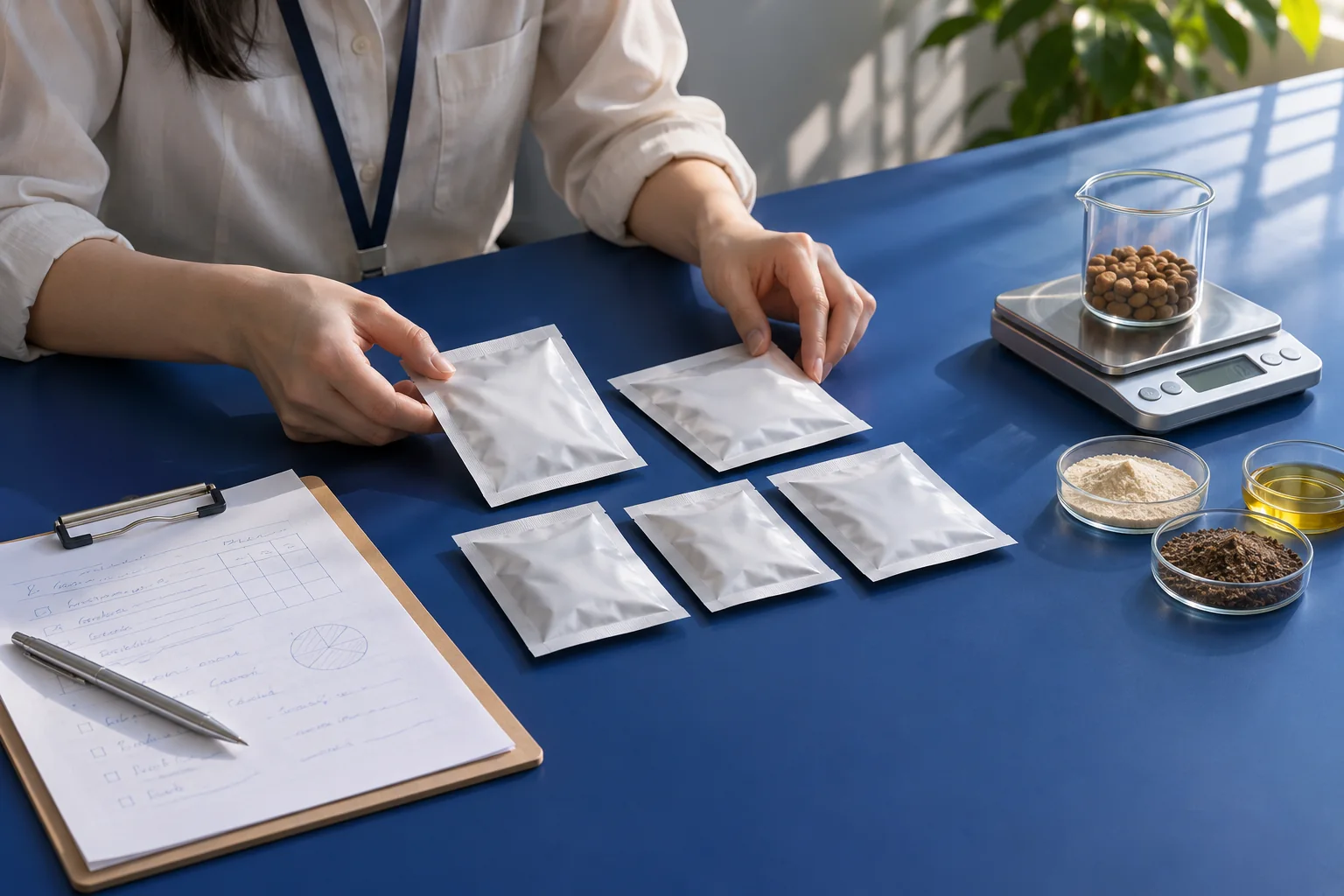
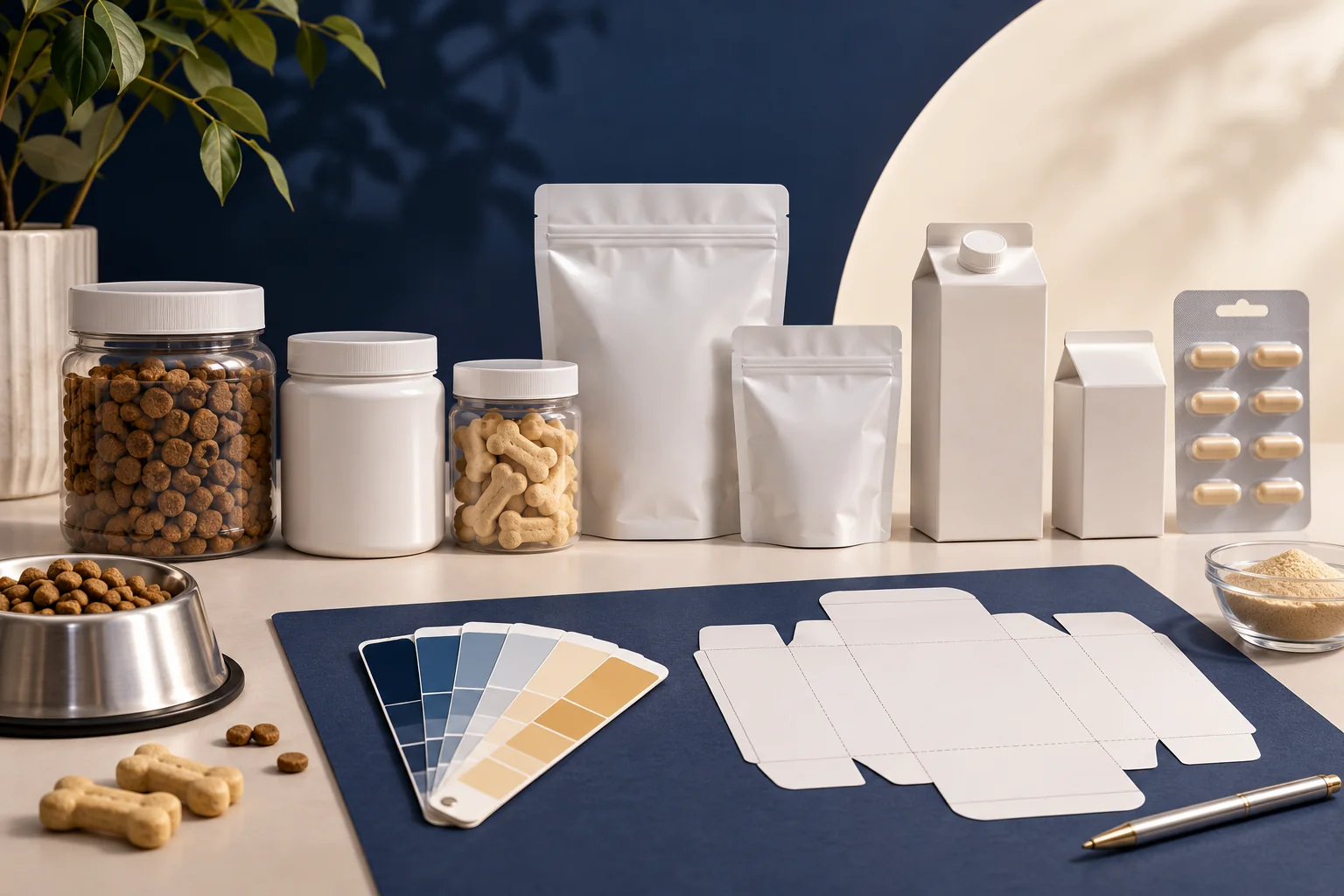
Start with the product's sensitivity to moisture, oxygen, light and handling. A sealed primary pack does different work from an outer carton. Oral films may require individually protected units; powders and oils raise different opening and measurement questions. Select materials with the actual formula and storage route in view.
Write down the intended use period after opening and the likely distribution conditions. A beautiful carton cannot compensate for a poorly chosen primary pack. Packaging feasibility and stability work should inform final material selection rather than follow a completed graphic design.
Design around a counted serving
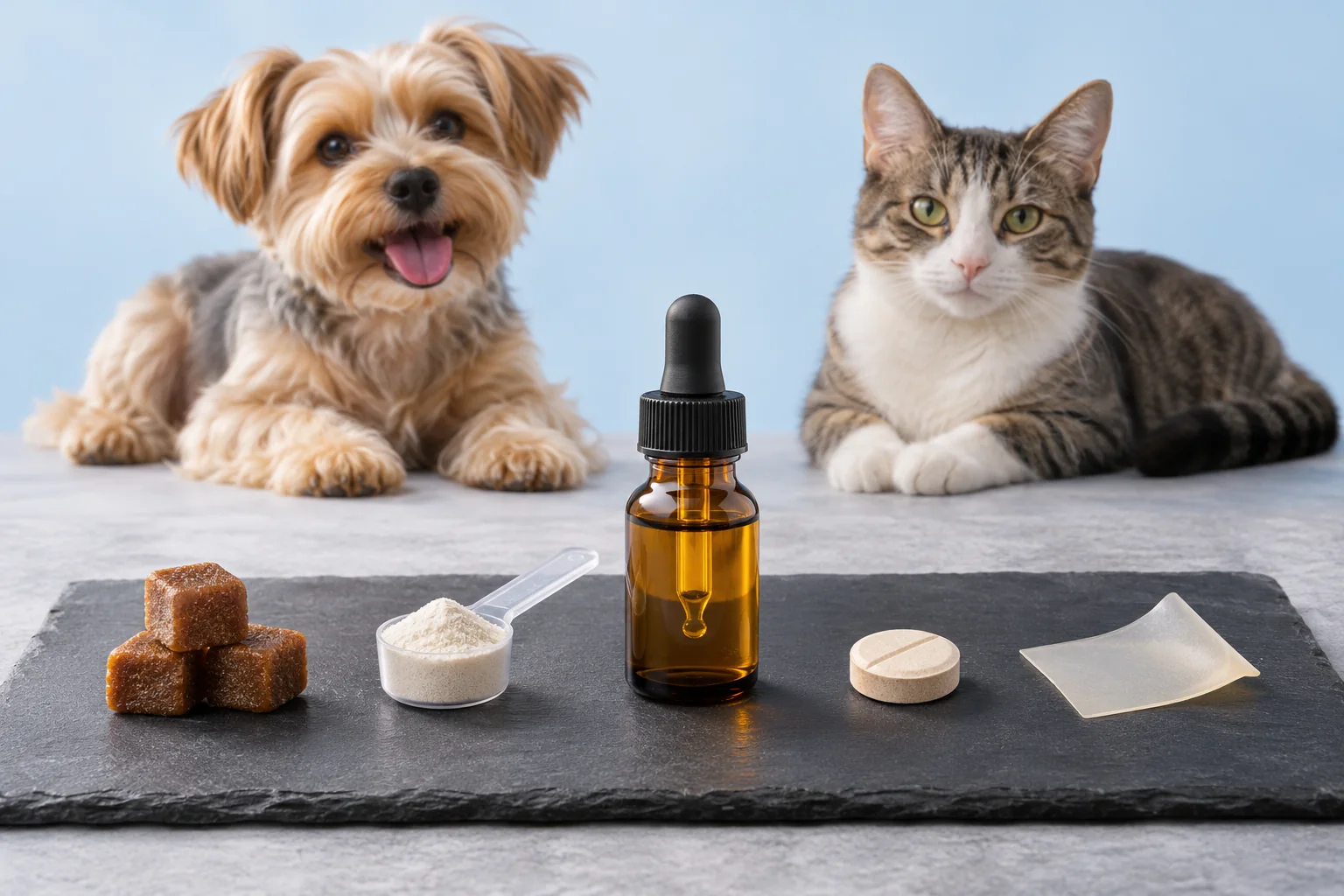
Specify the unit count or net quantity, proposed daily serving and expected days of use per retail pack. If a scoop, dropper or tear notch is part of the owner experience, include it in the functional brief. Check that the pack can be opened and the amount measured without asking the owner to infer a serving from appearance.
For multi-pet households, make the species and feeding directions prominent. Avoid borrowing a human supplement label layout without a pet-specific review. The physical size of a small bottle or card pack should be tested with real text lengths in each sales language.
Reserve space for verifiable information
The draft label needs room for product identity, species, ingredients, net amount, feeding directions, storage, batch and date coding, and the information required in the destination market. Keep technical copy tied to a formula version. If the ingredient ratio changes, review the declared amounts and related claims before printing a new pack.
Do not place a certification mark, laboratory claim or broad efficacy promise on artwork merely because it appeared in a supplier brochure. Request the supporting document and confirm it applies to the exact product, facility, market and proposed wording.
Check a physical proof before release
Review a printed or production-representative proof for legibility, barcode position, seal area, date coding and colour. A flat screen proof cannot show how text wraps around a bottle or whether a code remains readable after filling. Record the approved dieline and artwork revision with the purchase specification.
Agree who supplies final translations and who approves market-specific statements. We can discuss package options and product documentation during an OEM or ODM project, while final artwork and regulatory suitability remain subject to product and market review.
A useful enquiry includes
- Choose primary packaging for the finished formula
- Make the serving measurable for the owner
- Tie label copy to formula and market review
- Approve a physical proof and record its revision
Business guidance for developing pet nutrition products. Individual feeding and health questions require veterinary advice.