

Start with the amount and the feeding routine
A preferred pack photograph is a weak starting point for formulation. Write the intended daily contribution in a common unit, then ask how many pieces, drops or grams the owner would need to give. Consider the pet's body size, typical feeding routine and whether the product will be offered directly or mixed with food.
A dog that readily takes a chew and a cat that rejects unfamiliar textures present different usability questions. Palatability must be checked on the finished formula. A concept image cannot show whether an animal will accept the same product over weeks of use.
Compare the format constraints explicitly
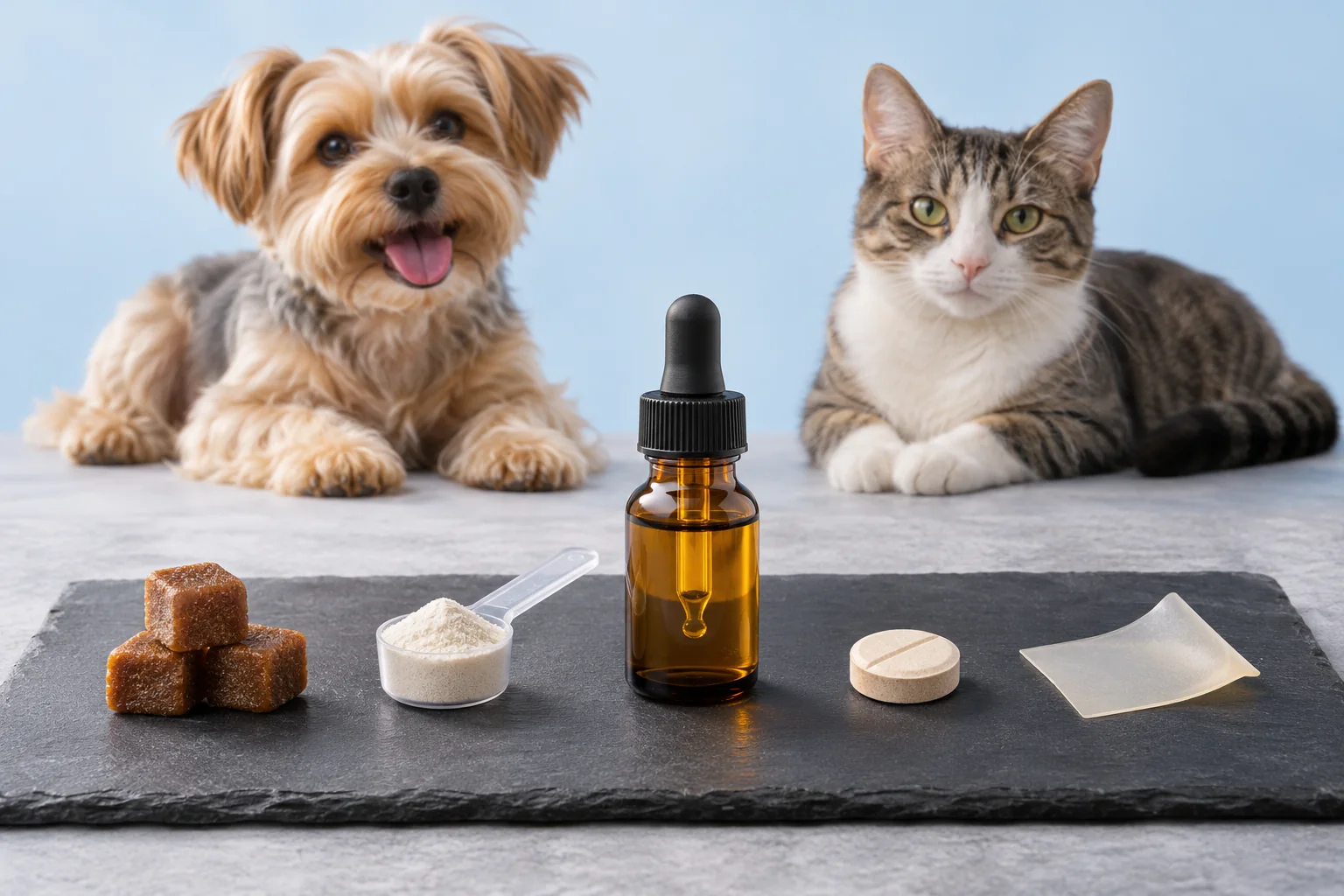
Soft chews combine a snack-like handling experience with formulation questions around water activity, texture, portion weight and flavour. Powders can carry a larger serving but require a clear scoop or sachet instruction and an assessment of dispersion on food. Drops need a measured dispenser, oil or water compatibility review and an opening-life plan.
Tablets introduce size, hardness and divisibility questions. Oral films have limited ingredient-loading space, so the film base and active components compete for the same area. Single-dose packs may make the serving easier to count but add packaging material. None of these formats is universally better; compare them against one defined product brief.
Review the species before borrowing an ingredient concept
Do not assume that a dog formula can be relabelled for cats. Species-specific nutritional needs and tolerances must be reviewed for the proposed ingredients and serving. The owner-facing directions also need to say exactly which animals the product is intended for and how to measure the dose.
A functional direction such as skin and coat, digestion or mobility describes the development brief; it does not by itself substantiate an efficacy claim. Keep proposed claims in a separate review column until the finished formulation and destination-market rules have been assessed.
Test the whole use experience
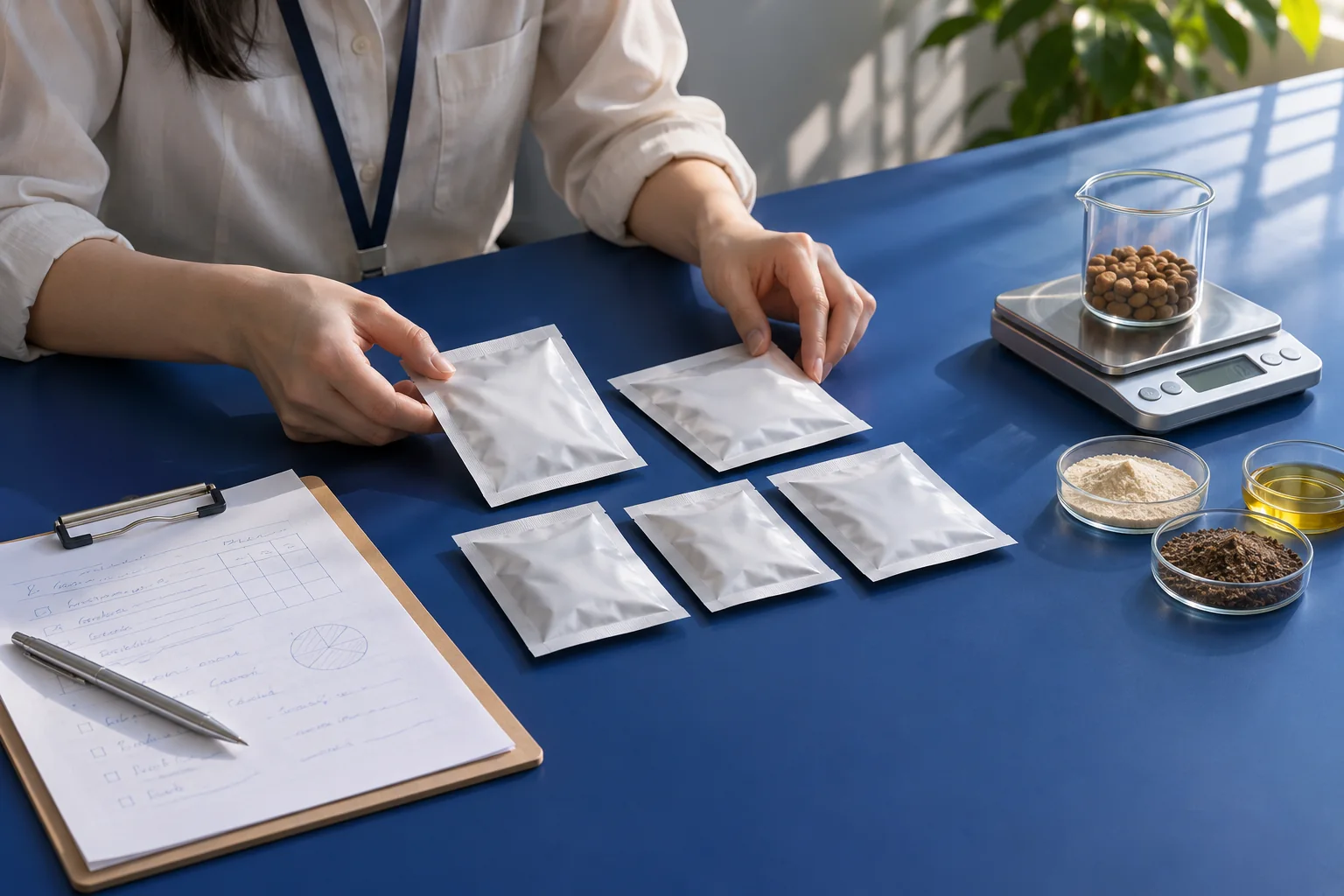
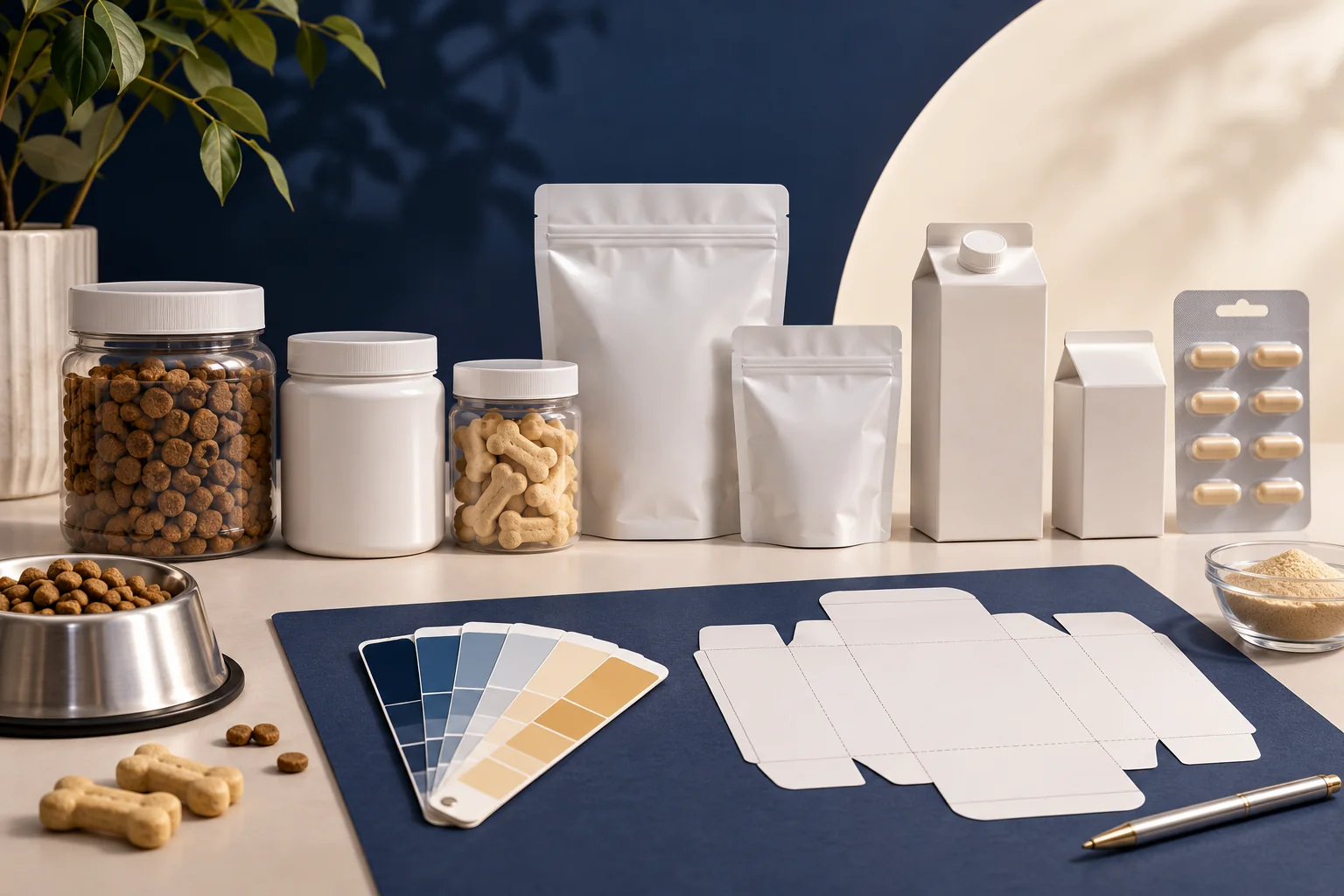
Assess an actual pilot unit in its proposed primary pack. Check opening, counting or measuring, aroma, texture, storage and legibility. If the owner needs to split a piece or estimate a drop size, the pack and directions must support that action. The best format on a formulation spreadsheet may still be awkward in a household.
Request a product specification and a clear plan for any stability or palatability work required by the project. Formula feasibility, sample availability and sample cost are confirmed case by case.
A useful enquiry includes
- Amount per daily serving comes before pack design
- Check species fit and owner handling
- Use finished-product evidence for final claims
- Pilot samples should be assessed in the intended primary pack
Business guidance for developing pet nutrition products. Individual feeding and health questions require veterinary advice.